

Table Of Content
- Introduction
- What Are Fortnite Ranked Levels?
- History of Ranked Play in Fortnite
- How the Ranked System Works
- 4.1 Ranks Overview
- 4.2 Progression Mechanics
- All Fortnite Ranked Levels Explained
- 5.1 Bronze (I–III)
- 5.2 Silver (I–III)
- 5.3 Gold (I–III)
- 5.4 Platinum (I–III)
- 5.5 Diamond (I–III)
- 5.6 Elite
- 5.7 Champion
- 5.8 Unreal
- Rank Reset and Season System
- How to Rank Up Faster in Fortnite
- 7.1 Focus on Placement
- 7.2 Improve Combat Efficiency
- 7.3 Team Coordination in Squads
- 7.4 Map Knowledge and Rotations
- Matchmaking and Skill-Based System
- Rewards and Benefits of Ranking Up
- Differences Between Battle Royale and Zero Build Ranked
- Ranked Play Rules and Restrictions
- Common Mistakes That Lower Your Rank
- Pro Tips from Top Fortnite Players
- The Future of Fortnite Ranked Mode
- Conclusion
- FAQs
Introduction
If you’ve ever dropped into Fortnite and wondered how some players climb the competitive ladder so fast, you’re in the right place. Fortnite ranked levels are a major part of the game’s competitive mode, designed to measure your skill and match you against players of similar ability. Whether you’re grinding your way to Unreal or just starting out in Bronze, understanding how the system works is key to improving.
What Are Fortnite Ranked Levels?
Fortnite ranked levels represent your skill tier in competitive play. Introduced to make the matchmaking fairer and more exciting, the ranked system ensures that you face opponents around your level — whether you play Battle Royale or Zero Build mode.
Each level showcases your current standing in Fortnite’s global competitive environment, letting players know where they stand among millions.
History of Ranked Play in Fortnite
Epic Games launched the Ranked Mode in Chapter 4, Season 3, marking a big shift in Fortnite’s competitive scene. Before that, players relied on Arena Mode for competitive matchmaking. Ranked Mode replaced it, simplifying ranks and making progression more transparent and rewarding.
How the Ranked System Works
4.1 Ranks Overview
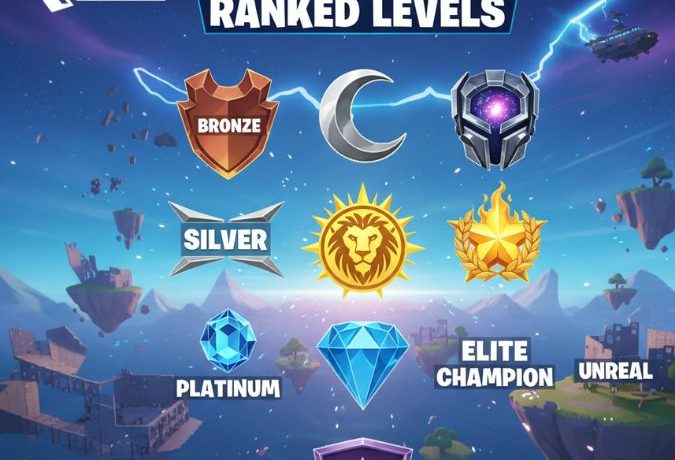
Fortnite’s ranked system features eight main divisions, each split into smaller sub-tiers. The journey starts at Bronze and goes all the way up to Unreal — the ultimate symbol of skill.
4.2 Progression Mechanics
Progression depends on your performance in matches — mainly your eliminations, placement, and survival time. Winning matches or placing high boosts your rank, while early eliminations or poor performances can slow your progress.
All Fortnite Ranked Levels Explained

Let’s break down each Fortnite rank tier to understand what it means and how to progress.
5.1 Bronze (I–III)
This is where every new player begins. It’s a learning zone where you face others who are new to ranked play. Focus on improving basic mechanics like building, shooting accuracy, and positioning.
5.2 Silver (I–III)
At Silver level, players have a decent grasp of game fundamentals. Consistency is key here — aim for good placements and fewer reckless fights.
5.3 Gold (I–III)
Gold is where the competition gets tougher. Players here know the game’s pacing, rotations, and combat strategies. Smart positioning often wins over raw aggression.
5.4 Platinum (I–III)
You’re officially skilled. Platinum players show strong mechanical and strategic skills. Mistakes are punished quickly, and teamwork becomes critical in squad modes.
5.5 Diamond (I–III)
Diamond is for advanced players who consistently perform well. These matches are intense, and one wrong move can cost you the game.
5.6 Elite
Reaching Elite means you’ve left behind the casual crowd. This rank is filled with semi-pro players and streamers looking to refine their skills.
5.7 Champion
At Champion rank, only the best of the best remain. Each game feels like a mini-tournament, with top-tier mechanics, rotations, and teamwork.
5.8 Unreal
The Unreal rank is the pinnacle of Fortnite ranked play. Once you reach this level, you’ll be part of an exclusive leaderboard showcasing the best players globally. There’s no demotion from Unreal — once you make it, you’re locked in for the season.
Rank Reset and Season System
Each Fortnite season resets ranked progress to ensure fair competition. Your new starting point depends on your previous performance, meaning top players don’t always start at the very bottom again.
How to Rank Up Faster in Fortnite
7.1 Focus on Placement
Staying alive longer gives you more points than chasing kills early. Smart rotations and positioning go a long way.
7.2 Improve Combat Efficiency
Winning 1v1s is crucial. Practice your aim, building, and edit speed to gain the upper hand in tight fights.
7.3 Team Coordination in Squads
Communication makes or breaks a team. Use clear callouts and plan rotations to avoid chaotic engagements.
7.4 Map Knowledge and Rotations
Knowing where to land and when to move is vital. Avoid high-traffic areas early unless you’re confident in your skills.
Matchmaking and Skill-Based System
Fortnite uses Skill-Based Matchmaking (SBMM) to ensure balance. You’ll mostly face players around your rank, but sometimes the system matches you slightly above or below for variety and faster queue times.
Rewards and Benefits of Ranking Up
Epic Games often adds exclusive rewards for ranked players — from cosmetic badges to limited-time emotes or weapon wraps. But the real reward is prestige; higher ranks give you bragging rights and recognition in the Fortnite community.
Differences Between Battle Royale and Zero Build Ranked
Both modes have separate ranked progressions. In Zero Build, strategy and gun skill matter more since there’s no building advantage. In Battle Royale, fast editing and creative structures can decide fights in seconds.
Ranked Play Rules and Restrictions
To maintain fair competition:
-
Players must enable 2FA (Two-Factor Authentication).
-
Cross-platform lobbies apply — PC, console, and mobile players can be matched together.
-
Some cosmetic items or abilities may be disabled to ensure balance.
Common Mistakes That Lower Your Rank
-
Landing in hot zones without preparation.
-
Engaging in unnecessary fights.
-
Poor resource management.
-
Ignoring storm rotation timing.
Avoiding these can significantly improve your ranked climb.
Pro Tips from Top Fortnite Players
-
Warm up before every match in Creative.
-
Watch pro replays to understand high-level strategies.
-
Play with consistent teammates for better synergy.
-
Adapt to meta changes each season — new weapons or items can alter tactics completely.
The Future of Fortnite Ranked Mode
Epic continues refining the ranked experience, adding leaderboards, seasonal rewards, and even tournament integration. Expect better balancing and maybe even new ranks in the future as Fortnite’s competitive scene evolves.
Conclusion
Fortnite ranked levels are more than just badges — they’re a reflection of your skill, dedication, and ability to adapt. Whether you’re chasing Unreal or simply trying to improve each season, every match teaches something valuable. Keep grinding, stay consistent, and who knows — you might just become the next Fortnite champion!
FAQs
1. How many ranks are there in Fortnite Ranked Mode?
There are eight major ranks: Bronze, Silver, Gold, Platinum, Diamond, Elite, Champion, and Unreal.
2. Does my rank reset every season?
Yes, Fortnite ranked levels reset at the beginning of each season to maintain balance and fair progression.
3. Is Unreal rank permanent?
You can’t drop from Unreal during the same season, but ranks reset for the next season.
4. Can I play ranked in Zero Build mode?
Absolutely! Fortnite supports separate ranked progressions for both Battle Royale and Zero Build.
5. What’s the fastest way to climb ranks?
Focus on placement, avoid unnecessary fights, and improve your aim and rotation strategies.


No Comment! Be the first one.