

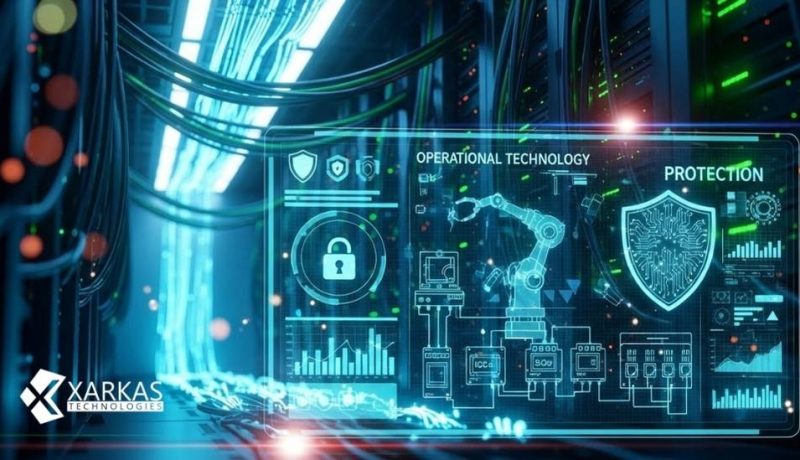
Top Cybersecurity Companies for Operational Technology Protection

Table Of Content
- Introduction to Operational Technology Security
- Understanding the OT Threat Landscape
- Common Threats to OT Systems
- The Convergence of IT and OT
- Key Features of Effective OT Security Solutions
- Real-Time Monitoring and Threat Detection
- Network Segmentation and Access Control
- Vulnerability Management
- Top Cybersecurity Companies Specializing in OT Protection
- Claroty
- Nozomi Networks
- Dragos
- Fortinet
- Palo Alto Networks
- Honeywell
- Schneider Electric
- Cisco
- Tenable
- Armis
- How to Choose the Right OT Security Provider
- Assessing Your Organization’s Needs
- Integration with Existing Infrastructure
- Vendor Support and Incident Response
- Future Trends in OT Cybersecurity
- Conclusion
- FAQs
- 1. What’s the difference between IT security and OT security?
- 2. How much does OT cybersecurity cost for a typical manufacturing facility?
- 3. Can we use traditional IT security tools to protect OT environments?
- 4. How long does it take to implement an OT security solution?
- 5. What certifications or standards should OT security solutions comply with?
Introduction to Operational Technology Security
Ever wondered what keeps factories running, power grids humming, and water treatment plants operating smoothly? That’s operational technology at work. But here’s the kicker—these critical systems that literally power our modern world are increasingly under attack from cyber threats. Welcome to the high-stakes world of OT security, where protecting industrial systems isn’t just about safeguarding data; it’s about preventing real-world disasters.
What is Operational Technology?
Operational Technology refers to hardware and software that monitors and controls physical devices, processes, and infrastructure. Think programmable logic controllers (PLCs), supervisory control and data acquisition (SCADA) systems, distributed control systems (DCS), and industrial control systems (ICS). Unlike traditional IT systems that handle information, OT systems interact with the physical world—opening valves, controlling temperatures, managing production lines, and keeping critical infrastructure operational.
Why OT Security Matters More Than Ever
The digital transformation of industrial environments has created unprecedented vulnerability. As organizations connect their OT systems to corporate networks and the internet for efficiency and remote monitoring, they’ve inadvertently opened doors for cybercriminals and nation-state actors. A breach in an OT environment isn’t just about stolen data—it can mean production shutdowns, environmental disasters, or even loss of life. Remember the Colonial Pipeline ransomware attack? That’s just one example of how OT vulnerabilities can disrupt entire regions.
Understanding the OT Threat Landscape
Common Threats to OT Systems
OT environments face unique security challenges that traditional IT security tools weren’t designed to handle. Ransomware attacks targeting industrial systems have skyrocketed, with attackers knowing that manufacturers and utilities can’t afford extended downtime. Then there’s the insider threat—whether malicious employees or unintentional mistakes by well-meaning staff who don’t understand cybersecurity protocols.
State-sponsored attacks represent another significant concern. Critical infrastructure has become a prime target for geopolitical adversaries looking to gain strategic advantages. From power grids to water systems, these attacks aim to cause maximum disruption and demonstrate capability.
Supply chain compromises add another layer of complexity. When attackers infiltrate through third-party vendors or compromised software updates, they can gain persistent access to OT networks without raising immediate red flags.
The Convergence of IT and OT
Here’s where things get really interesting. For decades, OT systems operated in isolated environments—air-gapped from corporate networks and the internet. That isolation provided inherent security, but it also limited efficiency and visibility. Modern Industry 4.0 initiatives demand connectivity for data analytics, predictive maintenance, and operational optimization.
This convergence creates a perfect storm of security challenges. IT security teams often lack understanding of OT protocols and operational requirements, while OT engineers may not appreciate cybersecurity fundamentals. Bridging this gap requires specialized solutions that understand both worlds.
Key Features of Effective OT Security Solutions
Real-Time Monitoring and Threat Detection
In OT environments, time is everything. A delayed response to a security incident could mean catastrophic equipment damage or safety hazards. Effective OT security platforms provide continuous visibility into network traffic, device behavior, and operational anomalies.
These systems use machine learning and behavioral analytics to establish baselines of normal operations, then flag anything unusual—like unexpected communications between devices, unauthorized configuration changes, or suspicious command sequences. The best solutions understand industrial protocols like Modbus, DNP3, and OPC, providing context-aware alerts rather than overwhelming security teams with false positives.
Network Segmentation and Access Control
Think of network segmentation as compartmentalizing your industrial network into secure zones. By implementing proper segmentation following the Purdue Model, organizations can limit lateral movement if attackers compromise one segment. Critical control systems should be isolated from corporate networks, with strictly controlled pathways between zones.
Access control goes hand-in-hand with segmentation. Zero-trust principles are making their way into OT environments, ensuring that every device, user, and application must be authenticated and authorized before accessing resources. Role-based access controls ensure operators can only interact with the systems relevant to their responsibilities.
Vulnerability Management
OT systems present unique vulnerability management challenges. Unlike IT systems that receive regular patches, many industrial devices run legacy operating systems or firmware that can’t be easily updated without risking operational disruptions. Some equipment might be decades old, with no available patches for newly discovered vulnerabilities.
Effective OT vulnerability management solutions provide comprehensive asset inventory, risk prioritization based on actual threat intelligence, and compensating controls for systems that can’t be patched. Virtual patching and network-based protection can shield vulnerable devices while maintaining operational continuity.
Top Cybersecurity Companies Specializing in OT Protection
Claroty
Claroty has established itself as a leader in industrial cybersecurity, offering comprehensive visibility and protection for OT, IoT, and IoMT (Internet of Medical Things) environments. Their platform provides asset discovery, network monitoring, threat detection, and vulnerability management specifically designed for industrial networks.
What sets Claroty apart is their deep understanding of industrial protocols and operational requirements. Their solutions integrate seamlessly with existing infrastructure without disrupting operations, making them a favorite among manufacturers, energy companies, and utilities. Their partnership ecosystem with major industrial automation vendors ensures compatibility across diverse environments.
Nozomi Networks
Nozomi Networks delivers industrial security and visibility solutions that protect critical infrastructure and manufacturing environments. Their platform combines network security monitoring, asset intelligence, and operational visibility in a single solution.
Nozomi’s Guardian platform excels at discovering and profiling OT assets, providing detailed insights into device configurations, vulnerabilities, and communication patterns. Their threat intelligence capabilities leverage global visibility across thousands of industrial sites, enabling early warning of emerging threats. The company’s focus on operational reliability means their solutions won’t interfere with time-sensitive control processes.
Dragos
Founded by former NSA analysts who specialized in ICS threats, Dragos brings elite cybersecurity expertise specifically focused on industrial environments. Their platform is purpose-built to protect industrial infrastructure from cyber threats while respecting the unique operational requirements of OT systems.
Dragos distinguishes itself through deep threat intelligence on adversaries targeting industrial systems. Their research team tracks sophisticated threat groups and provides actionable intelligence to customers. The platform offers comprehensive visibility, threat detection, and response capabilities without requiring agents on OT devices—critical for legacy equipment that can’t be modified.
Fortinet
Fortinet has expanded its enterprise security portfolio to address OT environments with solutions specifically designed for industrial networks. Their FortiGate rugged firewalls can withstand harsh industrial conditions while providing advanced threat protection at the boundary between IT and OT networks.
What makes Fortinet attractive is their unified security fabric approach, allowing organizations to extend consistent security policies across IT and OT environments. Their solutions provide network segmentation, intrusion prevention, and application control with deep packet inspection for industrial protocols. For organizations already invested in Fortinet infrastructure, extending protection to OT networks becomes more seamless.
Palo Alto Networks
Palo Alto Networks entered the OT security space by acquiring companies with industrial expertise and integrating those capabilities into their comprehensive security platform. Their approach emphasizes Zero Trust architecture extended to industrial environments.
Their solution provides visibility into OT assets, vulnerability assessment, and policy enforcement without disrupting operations. The integration with their broader security ecosystem means organizations can correlate threats across IT and OT environments, providing unified visibility for security operations centers. Their machine learning-powered threat prevention helps identify sophisticated attacks targeting industrial systems.
Honeywell
As both an industrial automation vendor and cybersecurity provider, Honeywell offers unique perspective and solutions for OT security. Their Forge Cybersecurity platform combines their deep understanding of industrial processes with advanced security capabilities.
Honeywell’s solutions address the full security lifecycle—from asset discovery and risk assessment to monitoring, detection, and response. Their industrial expertise means they understand the operational impacts of security decisions, helping organizations balance protection with productivity. For facilities already running Honeywell control systems, their security solutions integrate naturally into existing infrastructure.
Schneider Electric
Schneider Electric leverages its position as a major industrial automation vendor to deliver security solutions deeply integrated with operational technology. Their cybersecurity services and products protect critical infrastructure across energy, manufacturing, and building automation sectors.
Their approach emphasizes secure-by-design principles, building security into industrial systems from the ground up rather than bolting it on later. Schneider offers consulting services, security assessments, managed security services, and technology solutions specifically tailored to industrial environments. Their Cybersecurity Services help organizations develop comprehensive security programs aligned with standards like IEC 62443.
Cisco
Cisco’s networking dominance extends into OT environments with industrial-grade switches, routers, and security appliances designed for harsh conditions. Their Industrial Network Director provides visibility and management capabilities specifically for OT networks.
Cisco’s strength lies in their comprehensive networking and security portfolio, allowing organizations to build segmented, secure industrial networks with consistent policy enforcement. Their solutions support industrial protocols while providing advanced threat protection, encrypted communications, and secure remote access. Integration with Cisco’s broader security architecture enables unified threat intelligence and response.
Tenable
Tenable, known for vulnerability management in IT environments, has extended their capabilities to OT with Tenable.ot (formerly Indegy). Their platform provides comprehensive visibility into industrial control systems, detecting configuration changes, vulnerabilities, and suspicious activities.
What distinguishes Tenable is their focus on vulnerability prioritization and risk quantification. Their solutions help security teams understand which vulnerabilities pose the greatest risk to operations, enabling data-driven remediation decisions. The platform monitors for unauthorized changes to control logic, device configurations, and firmware—critical for maintaining operational integrity.
Armis
Armis takes an agentless approach to asset visibility and security across IT, IoT, and OT environments. Their platform discovers and profiles every device connecting to the network, providing comprehensive asset inventory and risk assessment without requiring software installation on devices.
This passive monitoring approach makes Armis particularly valuable for OT environments with legacy equipment that can’t support security agents. Their platform uses machine learning to understand normal device behavior and identify anomalies that might indicate compromise. The unified visibility across diverse device types helps organizations understand their complete attack surface.
How to Choose the Right OT Security Provider
Assessing Your Organization’s Needs
Selecting an OT security vendor isn’t a one-size-fits-all decision. Start by understanding your specific environment—what types of industrial systems do you operate? What protocols do they use? What are your operational constraints around downtime and system modifications?
Consider your security maturity level. Are you just beginning your OT security journey with basic asset inventory, or do you need advanced threat detection and response capabilities? Your current security posture will influence which solutions are most appropriate.
Regulatory compliance requirements also shape vendor selection. Different industries face varying standards—utilities must comply with NERC CIP, manufacturers might need IEC 62443 alignment, and healthcare facilities have HIPAA considerations even for medical IoT devices.
Integration with Existing Infrastructure
The best security solution is one that actually gets deployed and used. Evaluate how potential vendors integrate with your existing industrial control systems, network infrastructure, and security tools. Solutions requiring extensive infrastructure changes or operational disruptions face implementation challenges that might delay or derail deployments.
Look for vendors offering flexible deployment options—on-premises for air-gapped networks, cloud-based for centralized visibility across multiple sites, or hybrid approaches that balance security and operational requirements. Compatibility with your existing SIEM, ticketing systems, and security orchestration tools enables streamlined workflows for security teams.
Vendor Support and Incident Response
When seconds count in preventing an operational incident, vendor support quality becomes critical. Evaluate not just the technology but the people and processes behind it. Does the vendor offer 24/7 support? Do they have incident response teams with industrial environment expertise?
Consider the vendor’s commitment to ongoing research and threat intelligence. The OT threat landscape evolves constantly, with new vulnerabilities and attack techniques emerging regularly. Vendors who actively research threats, publish intelligence, and rapidly update their solutions provide better long-term protection.
Future Trends in OT Cybersecurity
The future of OT security is being shaped by several converging trends. Artificial intelligence and machine learning will play increasingly important roles in detecting sophisticated threats and automating responses while minimizing false positives that could trigger unnecessary operational interventions.
Zero Trust architectures are migrating from IT into OT environments, though implementation requires careful consideration of operational requirements. We’ll see more granular access controls, continuous verification, and micro-segmentation even in traditionally flat industrial networks.
Cloud and edge computing are transforming how OT systems are monitored and managed. Hybrid architectures will become standard, with local edge processing for time-sensitive control functions and cloud-based analytics for broader visibility and threat intelligence correlation.
Quantum computing looms on the horizon as both a threat and opportunity. While quantum computers could eventually break current encryption standards, quantum-resistant cryptography development is already underway to protect long-lived industrial systems.
Regulatory frameworks will continue evolving, with governments recognizing critical infrastructure protection as a national security imperative. Expect more prescriptive standards, mandatory reporting requirements, and potentially liability frameworks that hold organizations accountable for inadequate OT security.
Conclusion
Protecting operational technology isn’t optional anymore—it’s a business imperative and societal responsibility. The companies highlighted here represent the vanguard of OT security, each bringing unique strengths to address the complex challenges of securing industrial environments. From Claroty’s comprehensive platform to Dragos’s threat intelligence expertise, from established automation vendors like Honeywell and Schneider Electric to networking giants like Cisco and Fortinet, organizations have access to sophisticated solutions purpose-built for industrial cybersecurity.
The key to success isn’t just selecting the right technology—it’s building a comprehensive security program that balances protection with operational requirements. Start by understanding your unique environment, assess vendors based on your specific needs, and remember that OT security is a journey, not a destination. The threat landscape will continue evolving, and your security posture must evolve with it.
As industrial digitalization accelerates, the organizations that prioritize OT security will be the ones that thrive. They’ll avoid costly breaches, maintain operational resilience, and build trust with customers and stakeholders. The question isn’t whether to invest in OT security—it’s which partners will help you build the most effective defenses for your critical systems.
FAQs
1. What’s the difference between IT security and OT security?
IT security focuses on protecting data confidentiality, integrity, and availability, typically prioritizing confidentiality first. OT security protects physical processes and equipment, prioritizing availability and safety above all else. OT systems often use specialized industrial protocols, have longer lifecycles, and can’t tolerate the same patching and update cycles as IT systems. Additionally, OT security must account for safety implications—a security measure that disrupts operations could potentially endanger human lives or cause environmental damage.
2. How much does OT cybersecurity cost for a typical manufacturing facility?
Costs vary dramatically based on facility size, complexity, and security maturity. A small facility might spend $50,000-$200,000 initially for basic visibility and monitoring solutions, while large, complex operations could invest millions in comprehensive programs including technology, consulting, training, and managed services. Ongoing costs include software subscriptions, maintenance, staff training, and continuous improvement. However, consider this against the cost of a successful cyberattack—production downtime alone can cost manufacturers tens of thousands to millions per hour, not including remediation costs, regulatory fines, and reputational damage.
3. Can we use traditional IT security tools to protect OT environments?
Not effectively. Traditional IT security tools weren’t designed for industrial protocols, operational requirements, or the unique constraints of OT systems. Standard vulnerability scanners might crash sensitive industrial equipment, IT firewalls may block legitimate industrial communications, and conventional endpoint protection agents often can’t be installed on specialized OT devices. While some security principles apply across both domains, OT environments require purpose-built solutions that understand industrial protocols, respect operational constraints, and provide passive monitoring capabilities.
4. How long does it take to implement an OT security solution?
Implementation timelines depend on solution complexity, organizational readiness, and deployment scope. Basic passive monitoring and asset discovery might be operational within weeks, while comprehensive programs including network segmentation, access controls, and integrated threat detection could take 6-18 months. Pilot projects in limited areas help validate solutions before broader deployment. Remember that OT security isn’t a one-time project—it’s an ongoing program requiring continuous refinement as threats evolve and operations change.
5. What certifications or standards should OT security solutions comply with?
Look for solutions aligned with IEC 62443 (industrial cybersecurity standards), NIST Cybersecurity Framework, and industry-specific standards like NERC CIP for utilities or FDA guidance for medical devices. Vendors with certified security professionals (GICSP, GRID, CISSP) demonstrate expertise. Solutions should support compliance with regulations relevant to your industry—GDPR for data privacy, SOX for financial controls, or sector-specific requirements. However, remember that compliance is a floor, not a ceiling—meeting minimum standards doesn’t guarantee adequate protection against sophisticated threats.


No Comment! Be the first one.