


Table Of Content
- Introduction to TrickBot
- What is TrickBot?
- Origin and Development
- Evolution Over Time
- How Does TrickBot Work?
- Infection Methods
- The Attack Process
- Initial Compromise
- Lateral Movement
- Key Features of TrickBot
- Modular Architecture
- Banking Trojan Capabilities
- Ransomware Delivery
- Who is Behind TrickBot?
- Cybercriminal Organizations
- Connection to Other Malware
- Notable TrickBot Attacks
- Healthcare Sector Targeting
- Financial Institutions
- The Impact of TrickBot
- Economic Damage
- Data Breaches
- How to Detect TrickBot
- Warning Signs
- Security Tools
- Prevention and Protection Strategies
- Best Practices for Individuals
- Organizational Security Measures
- Employee Training
- Network Segmentation
- Law Enforcement Actions Against TrickBot
- The Future of TrickBot Threats
- Conclusion
- FAQs
Introduction to TrickBot
Have you ever wondered what keeps cybersecurity experts awake at night? If you’re looking for a name that sends shivers down their spines, TrickBot is definitely on that list. This sophisticated malware has been wreaking havoc across the digital landscape for years, targeting everyone from individual users to massive corporations and even critical infrastructure. Understanding TrickBot isn’t just about knowing another cybersecurity term—it’s about protecting yourself and your organization from one of the most adaptable and dangerous threats in cyberspace today.
What is TrickBot?
TrickBot is a modular malware platform that initially emerged as a banking Trojan but has since evolved into something far more sinister. Think of it as a Swiss Army knife for cybercriminals—versatile, dangerous, and constantly being upgraded with new tools. Unlike simple viruses that just cause disruption, TrickBot is designed to steal sensitive information, deliver additional malware, and provide attackers with persistent access to infected systems.
Origin and Development
TrickBot first appeared in the wild around 2016, believed to be created by the same developers behind the infamous Dyreza banking Trojan. The malware was initially focused on stealing banking credentials and financial information from unsuspecting victims. However, what started as a financial theft tool quickly transformed into something much more ambitious.
The creators of TrickBot didn’t just build a static piece of malware—they built a framework that could be continuously updated and expanded. This forward-thinking approach allowed TrickBot to remain relevant and dangerous even as cybersecurity defenses improved.
Evolution Over Time
TrickBot’s evolution has been nothing short of remarkable. What began as a relatively straightforward banking Trojan has grown into a multi-purpose malware platform. Over the years, it has added capabilities for credential harvesting, lateral movement within networks, ransomware deployment, and even espionage activities.
The malware has become increasingly sophisticated, incorporating advanced evasion techniques to avoid detection by antivirus software and security monitoring tools. Each new version brings enhanced features, making it harder to detect and remove. It’s like watching a predator adapt to its environment—constantly learning, constantly improving.
How Does TrickBot Work?
Understanding how TrickBot operates is crucial for defending against it. The malware follows a multi-stage attack process that’s designed to maximize its impact while minimizing the chance of detection.
Infection Methods
TrickBot typically spreads through several primary vectors. The most common is phishing emails containing malicious attachments or links. These emails are often cleverly disguised as legitimate communications from banks, government agencies, or trusted organizations. One click on that innocent-looking attachment, and the infection begins.
Another distribution method involves compromised websites that exploit vulnerabilities in browsers or plugins. Sometimes, TrickBot is delivered as a secondary payload by other malware that’s already infected a system. It’s like a domino effect—one infection leading to another, each more dangerous than the last.
The Attack Process
Initial Compromise
Once TrickBot gains entry to a system, it immediately begins establishing persistence. This means setting up mechanisms to ensure it survives system reboots and removal attempts. The malware modifies system settings, creates scheduled tasks, and plants itself in multiple locations across the infected machine.
During this phase, TrickBot also performs reconnaissance, gathering information about the system, installed software, network configuration, and user accounts. This intelligence helps the attackers determine whether the compromised system is valuable enough for further exploitation.
Lateral Movement
Perhaps one of TrickBot’s most dangerous capabilities is its ability to move laterally across a network. Once it has compromised a single machine, it doesn’t stop there. The malware actively searches for other vulnerable systems on the same network, attempting to spread and establish footholds throughout an organization.
This lateral movement often involves exploiting common network protocols, stealing credentials from memory, and leveraging administrative tools that are already present on the network. It’s like a thief who doesn’t just rob one house but systematically works their way through the entire neighborhood.
Key Features of TrickBot
Modular Architecture
What makes TrickBot particularly dangerous is its modular design. Instead of being a monolithic program with fixed capabilities, TrickBot operates as a platform that can load different modules based on the attackers’ objectives. Need to steal passwords? There’s a module for that. Want to conduct reconnaissance? Another module handles that.
This modularity means that TrickBot can be customized for different targets and objectives. It also makes the malware more difficult to analyze and defend against because different infections might exhibit different behaviors depending on which modules are deployed.
Banking Trojan Capabilities
Despite its evolution into a multi-purpose platform, TrickBot hasn’t forgotten its roots. The malware still excels at stealing financial information. It can capture login credentials for banking websites, intercept online transactions, and even manipulate web pages to trick users into revealing sensitive information.
The banking Trojan modules use web injection techniques that allow attackers to modify what victims see in their browsers. Imagine logging into your bank’s website, only the page you’re seeing has been altered to collect additional information that your bank would never ask for.
Ransomware Delivery
In recent years, TrickBot has become closely associated with ransomware attacks. The malware often serves as an initial access broker, preparing infected networks for devastating ransomware deployments. Once TrickBot has mapped out a network, stolen credentials, and identified critical systems, ransomware operators can deploy their payload with maximum effect.
This collaboration between TrickBot operators and ransomware gangs has led to some of the most damaging cyberattacks in recent history. Organizations suddenly find their entire networks encrypted, with attackers demanding millions of dollars in ransom.
Who is Behind TrickBot?
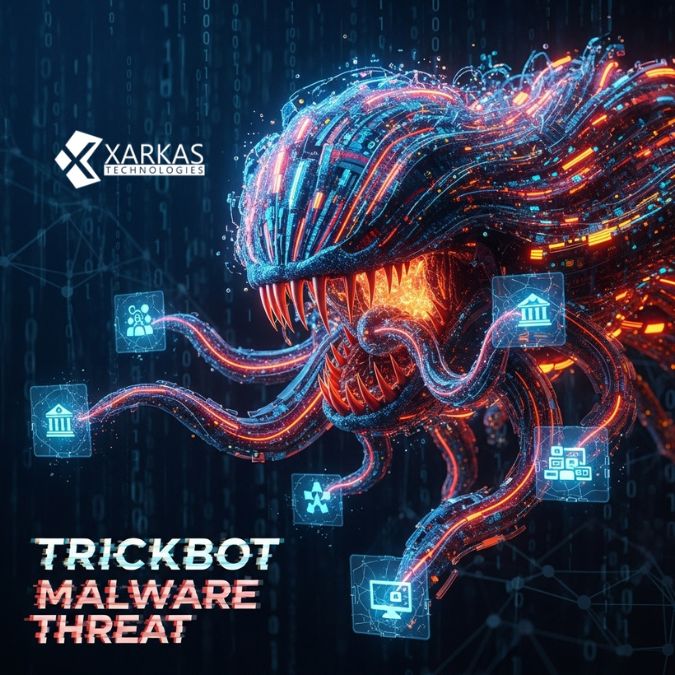
Cybercriminal Organizations
TrickBot is believed to be operated by a sophisticated cybercriminal organization, sometimes referred to as the Wizard Spider group. This isn’t a lone hacker working from a basement—it’s a well-organized, professionally run criminal enterprise with multiple teams handling different aspects of operations.
The organization appears to have significant resources and technical expertise. They continuously develop new features, maintain infrastructure for command and control servers, and coordinate with other criminal groups. It’s essentially a dark mirror of a legitimate software company, complete with development teams and customer support—except their “customers” are other criminals.
Connection to Other Malware
TrickBot doesn’t operate in isolation. It has documented connections to various other malware families and cybercriminal operations. Most notably, TrickBot has been linked to Ryuk and Conti ransomware attacks, where it serves as the initial infection vector that paves the way for ransomware deployment.
There’s also evidence of collaboration with Emotet, another notorious malware platform, with each distributing the other in a symbiotic relationship. This interconnected nature of modern malware makes the threat landscape even more complex and challenging to navigate.
Notable TrickBot Attacks
Healthcare Sector Targeting
One of the most concerning aspects of TrickBot has been its targeting of healthcare organizations. During the COVID-19 pandemic, healthcare systems became frequent victims of TrickBot infections that led to ransomware attacks. These attacks disrupted patient care, delayed medical procedures, and put lives at risk.
The attackers showed little regard for the critical nature of healthcare services. Hospitals found themselves having to choose between paying ransoms or operating without crucial digital systems. Some facilities had to divert emergency patients to other hospitals while they dealt with the aftermath of attacks.
Financial Institutions
As a banking Trojan at heart, TrickBot has consistently targeted financial institutions and their customers. Numerous banks and credit unions have reported TrickBot infections among their customer base, leading to fraudulent transactions and account takeovers.
The financial sector has been forced to invest heavily in defensive measures, implementing multi-factor authentication, advanced fraud detection systems, and customer education programs. Yet TrickBot continues to adapt, finding new ways to bypass these protections.
The Impact of TrickBot
Economic Damage
The economic impact of TrickBot is staggering. When you combine direct financial theft, ransomware payments, recovery costs, and lost productivity, the total damage runs into billions of dollars globally. Individual victims might lose their life savings, while corporations face expenses that can run into millions for a single incident.
Beyond immediate financial losses, there are long-term costs associated with damaged reputations, regulatory fines, and increased insurance premiums. Some small businesses never recover from a significant TrickBot-related attack, forced to close their doors permanently.
Data Breaches
TrickBot infections often result in massive data breaches. The malware is designed to exfiltrate sensitive information, including customer databases, intellectual property, employee records, and confidential business documents. This stolen data can be sold on dark web marketplaces, used for identity theft, or leveraged in future attacks.
For individuals whose data is compromised, the consequences can last for years. Stolen credentials might be used to access other accounts, personal information could be used for fraud, and the psychological impact of having your privacy violated shouldn’t be underestimated.
How to Detect TrickBot
Warning Signs
Detecting TrickBot early can make all the difference in minimizing damage. Some warning signs include unexpected system slowdowns, unusual network traffic patterns, disabled security software, and suspicious processes running on your computer.
You might notice strange behavior when accessing financial websites, such as unexpected prompts for additional information. Unexplained file modifications or new scheduled tasks appearing on your system could also indicate a TrickBot infection.
Security Tools
Modern endpoint protection platforms and antivirus solutions have improved their ability to detect TrickBot, though the malware’s evasion techniques make this an ongoing challenge. Network monitoring tools that analyze traffic patterns can identify the communications between infected systems and command-and-control servers.
Security information and event management (SIEM) systems can correlate various indicators of compromise to identify potential TrickBot activity. However, relying solely on automated tools isn’t enough—human expertise is still essential for identifying sophisticated attacks.
Prevention and Protection Strategies
Best Practices for Individuals
Protecting yourself from TrickBot starts with basic cybersecurity hygiene. Never open email attachments or click links from unknown senders. Keep your operating system and all software updated with the latest security patches. Use strong, unique passwords for different accounts, and enable multi-factor authentication wherever possible.
Install reputable antivirus software and keep it updated. Be cautious about what you download and install on your devices. Regularly back up important data to offline storage or secure cloud services. These simple steps can significantly reduce your risk of infection.
Organizational Security Measures
Organizations need a multi-layered defense strategy to protect against TrickBot. This includes implementing robust email filtering to block phishing attempts, deploying advanced endpoint protection solutions, and maintaining comprehensive network monitoring.
Employee Training
Your employees are your first line of defense. Regular security awareness training helps staff recognize phishing attempts, understand safe browsing practices, and know how to report suspicious activity. Simulated phishing exercises can test and reinforce these skills.
Creating a security-conscious culture where employees feel comfortable reporting potential incidents without fear of punishment is crucial. Often, the difference between a minor incident and a major breach is how quickly someone reports something suspicious.
Network Segmentation
Proper network segmentation can limit TrickBot’s ability to move laterally. By dividing your network into separate zones with controlled access between them, you contain potential infections and prevent malware from reaching critical systems.
Implementing the principle of least privilege ensures that users and systems only have access to the resources they absolutely need. This reduces the potential damage if credentials are compromised.
Law Enforcement Actions Against TrickBot
Law enforcement agencies worldwide have taken action against TrickBot’s infrastructure. In 2020, a coordinated operation disrupted TrickBot’s command-and-control servers, temporarily hindering its operations. Microsoft also obtained a court order to take down servers associated with the malware.
However, TrickBot has proven resilient. Despite these efforts, the malware has repeatedly recovered and resumed operations. The decentralized and redundant nature of its infrastructure makes complete takedown extremely difficult. It’s like playing whack-a-mole—shut down one server, and another pops up somewhere else.
The Future of TrickBot Threats
What does the future hold for TrickBot? While law enforcement actions have disrupted operations, the malware and its operators remain a significant threat. We’re likely to see continued evolution, with new techniques for evasion, persistence, and exploitation.
The trend toward ransomware delivery will probably continue, as it’s proven highly profitable for cybercriminals. We might also see TrickBot expanding into new sectors or developing capabilities for attacking emerging technologies like cloud infrastructure and Internet of Things devices.
The cybersecurity community must remain vigilant, continuously updating defenses and sharing threat intelligence. The battle against TrickBot and similar threats is ongoing, requiring constant adaptation and innovation from defenders.
Conclusion
TrickBot represents one of the most sophisticated and persistent malware threats in the modern digital landscape. From its origins as a banking Trojan to its current role as a multi-purpose malware platform and ransomware delivery vehicle, TrickBot has consistently evolved to remain dangerous and relevant. The impact of this malware extends far beyond individual victims, affecting organizations, critical infrastructure, and the economy as a whole.
Understanding TrickBot is the first step toward protecting yourself and your organization. By implementing strong security practices, maintaining vigilance, and staying informed about emerging threats, you can significantly reduce your risk of falling victim to this dangerous malware. Remember, cybersecurity isn’t a one-time effort—it’s an ongoing commitment that requires attention, resources, and adaptability.
The fight against TrickBot continues, with security researchers, law enforcement, and defenders worldwide working to counter this threat. While complete eradication may not be possible in the short term, every defensive measure taken and every user educated makes the digital world a little bit safer for everyone.
FAQs
1. Can TrickBot infect Mac or Linux systems, or does it only target Windows?
TrickBot primarily targets Windows systems, as these are most common in both enterprise and personal computing environments. However, once TrickBot has infected a Windows machine on a network, it can potentially impact other systems regardless of operating system by stealing credentials, intercepting network traffic, or serving as a launching point for additional attacks. While Mac and Linux systems have some inherent protection against Windows-specific malware, no system is completely immune when connected to a compromised network.
2. How can I tell if my computer is already infected with TrickBot?
Signs of TrickBot infection include unexpected system slowdowns, disabled antivirus software, unusual network activity, suspicious processes running in Task Manager, and strange behavior when accessing banking websites. However, TrickBot is designed to operate stealthily, so you might not notice obvious symptoms. Running a full system scan with updated security software and checking for unauthorized scheduled tasks or startup programs can help identify infections. If you suspect infection, consult with cybersecurity professionals for thorough analysis.
3. If I’ve been infected with TrickBot, can I simply remove it with antivirus software?
While modern antivirus solutions can detect and remove many TrickBot infections, removal isn’t always straightforward. TrickBot’s persistence mechanisms and ability to deeply embed itself in systems mean that simple removal might not eliminate all traces. Additionally, even after removal, attackers may have already stolen your credentials and data. Professional remediation is recommended, which includes thorough system analysis, credential resets, and potentially rebuilding compromised systems from clean backups to ensure complete removal.
4. Are mobile devices like smartphones and tablets vulnerable to TrickBot?
TrickBot doesn’t typically infect mobile devices directly, as it’s designed for Windows environments. However, mobile users aren’t entirely safe from the TrickBot threat ecosystem. If TrickBot has compromised your computer and stolen credentials that you also use on mobile devices, attackers could use those credentials to access your mobile accounts. Additionally, phishing campaigns associated with TrickBot operations might target mobile users through SMS or messaging apps, attempting to steal credentials or install mobile malware.
5. Why do cybercriminals keep using TrickBot instead of creating new malware?
TrickBot remains valuable to cybercriminals because it’s a proven, reliable platform with extensive capabilities and ongoing development. Creating sophisticated malware from scratch requires significant time, expertise, and resources. TrickBot’s modular architecture means operators can continuously add new features and adapt to changing security landscapes without starting over. The existing infrastructure, established distribution networks, and proven track record of successful attacks make TrickBot an attractive tool that criminals continue to invest in rather than replacing it entirely.




No Comment! Be the first one.