

Cloud Security Tips: The Ultimate Guide to Protecting Your Data in the Cloud

Table Of Content
- Understanding Cloud Security: A Strategic Necessity
- Implement Strong Identity and Access Management (IAM)
- Encrypt Data at All Levels
- Regularly Monitor and Audit Cloud Activity
- Secure Your Cloud Configuration
- Use Advanced Threat Detection Tools
- Backup Data and Implement Disaster Recovery Plans
- Ensure Compliance with Security Standards
- Secure APIs and Interfaces
- Educate and Train Your Team
- Adopt Zero Trust Security Model
- Use Secure Cloud Providers and Services
- Patch and Update Systems Regularly
- Segment Your Network for Better Security
- Implement Strong Endpoint Security
- Conclusion: Build a Resilient Cloud Security Strategy
In today’s rapidly evolving digital landscape, cloud computing has become the backbone of modern businesses. As organizations increasingly migrate their infrastructure, applications, and sensitive data to the cloud, ensuring robust cloud security is no longer optional—it is essential. We present a comprehensive, actionable, and highly effective set of cloud security tips designed to safeguard your digital assets and strengthen your overall cybersecurity posture.
Understanding Cloud Security: A Strategic Necessity
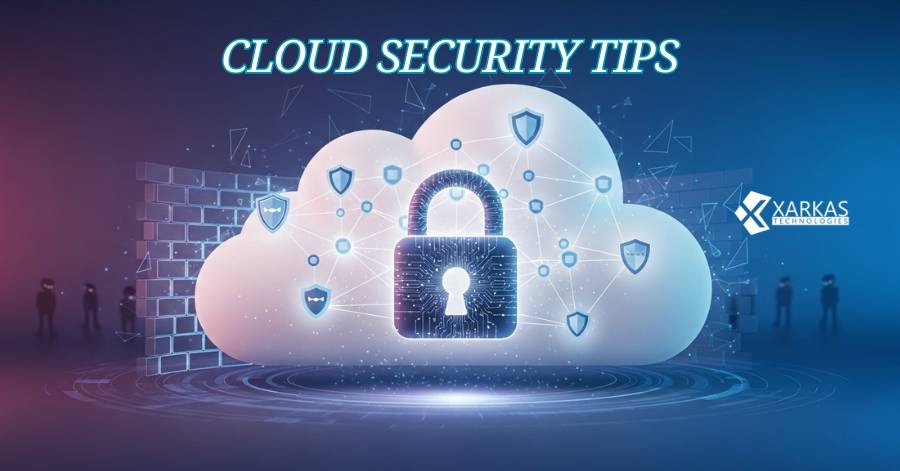
Cloud security refers to the collection of technologies, policies, controls, and services that protect cloud-based systems, data, and infrastructure. Without a structured approach, organizations expose themselves to data breaches, unauthorized access, compliance violations, and financial loss.
We emphasize that cloud security must be treated as a continuous process, not a one-time setup.
Implement Strong Identity and Access Management (IAM)
One of the most critical cloud security tips is to enforce strict identity and access controls.
- Use multi-factor authentication (MFA) for all users
- Apply the principle of least privilege (PoLP)
- Regularly review and revoke unnecessary permissions
- Use role-based access control (RBAC) for better governance
By controlling who has access to what, we minimize the risk of internal threats and credential misuse.
Encrypt Data at All Levels
Data encryption is a cornerstone of effective cloud security.
- Enable end-to-end encryption
- Encrypt data both at rest and in transit
- Use strong encryption standards (AES-256)
- Manage encryption keys securely with Key Management Services (KMS)
Encryption ensures that even if data is intercepted, it remains unreadable and secure.
Regularly Monitor and Audit Cloud Activity
Continuous monitoring is essential for detecting suspicious activity.
- Use cloud-native monitoring tools
- Enable real-time alerts and logging
- Conduct regular security audits and vulnerability scans
- Analyze logs using SIEM (Security Information and Event Management) systems
Proactive monitoring helps identify threats before they escalate into serious incidents.
Secure Your Cloud Configuration
Misconfigurations are one of the leading causes of cloud breaches.
- Avoid default settings
- Regularly scan for misconfigured storage buckets
- Disable unused services and ports
- Implement configuration management tools
We ensure that every component is configured with maximum security in mind.
Use Advanced Threat Detection Tools
Modern threats require advanced solutions.
- Deploy AI-driven threat detection systems
- Use intrusion detection and prevention systems (IDPS)
- Enable behavioral analytics
- Integrate threat intelligence feeds
These tools provide deep visibility and help respond to threats in real-time.
Backup Data and Implement Disaster Recovery Plans
No security strategy is complete without data backup and recovery.
- Perform automated, regular backups
- Store backups in multiple geographic locations
- Test disaster recovery plans frequently
- Ensure quick recovery time objectives (RTOs)
This guarantees business continuity even during cyberattacks or system failures.
Ensure Compliance with Security Standards
Compliance is a critical aspect of cloud security.
- Follow frameworks like ISO 27001, GDPR, HIPAA
- Maintain proper documentation and reporting
- Conduct compliance audits regularly
- Use compliance management tools
We align our cloud environment with industry best practices and legal requirements.
Secure APIs and Interfaces
Cloud environments rely heavily on APIs, making them a key attack vector.
- Use secure API gateways
- Implement authentication and authorization mechanisms
- Monitor API traffic continuously
- Limit exposure with rate limiting and throttling
Securing APIs protects against data leaks and unauthorized access.
Educate and Train Your Team
Human error remains one of the biggest security risks.
- Conduct regular security awareness training
- Educate employees about phishing and social engineering attacks
- Establish clear security policies and protocols
- Encourage secure password practices
A well-trained team acts as the first line of defense.
Adopt Zero Trust Security Model
The Zero Trust model assumes that no entity should be trusted by default.
- Verify every user and device
- Continuously authenticate and authorize access
- Segment networks into smaller zones
- Monitor all internal and external traffic
This approach significantly reduces the risk of lateral movement within systems.
Use Secure Cloud Providers and Services
Choosing the right cloud provider is fundamental.
- Evaluate providers based on security certifications
- Review their shared responsibility model
- Ensure they offer built-in security features
- Check for regular updates and patch management
We rely on providers that prioritize security, transparency, and reliability.
Patch and Update Systems Regularly
Outdated systems are vulnerable to exploitation.
- Apply security patches immediately
- Enable automatic updates where possible
- Monitor for newly discovered vulnerabilities
- Maintain updated software inventories
Keeping systems current prevents attackers from exploiting known weaknesses.
Segment Your Network for Better Security
Network segmentation limits the spread of attacks.
- Divide networks into isolated segments
- Use firewalls and access controls between segments
- Monitor inter-segment traffic
- Restrict sensitive data access
Segmentation ensures that a breach in one area does not compromise the entire system.
Implement Strong Endpoint Security
Endpoints connecting to the cloud must be secured.
- Use endpoint detection and response (EDR) tools
- Install antivirus and anti-malware software
- Enforce device compliance policies
- Monitor endpoint activity continuously
Securing endpoints prevents unauthorized access to cloud resources.
Conclusion: Build a Resilient Cloud Security Strategy
Effective cloud security requires a multi-layered approach that combines technology, processes, and people. By implementing these advanced cloud security tips, we create a resilient, scalable, and secure cloud environment capable of defending against modern cyber threats.
We remain committed to continuously evolving our strategies, adopting new technologies, and reinforcing our defenses to ensure maximum protection of data and infrastructure.



No Comment! Be the first one.